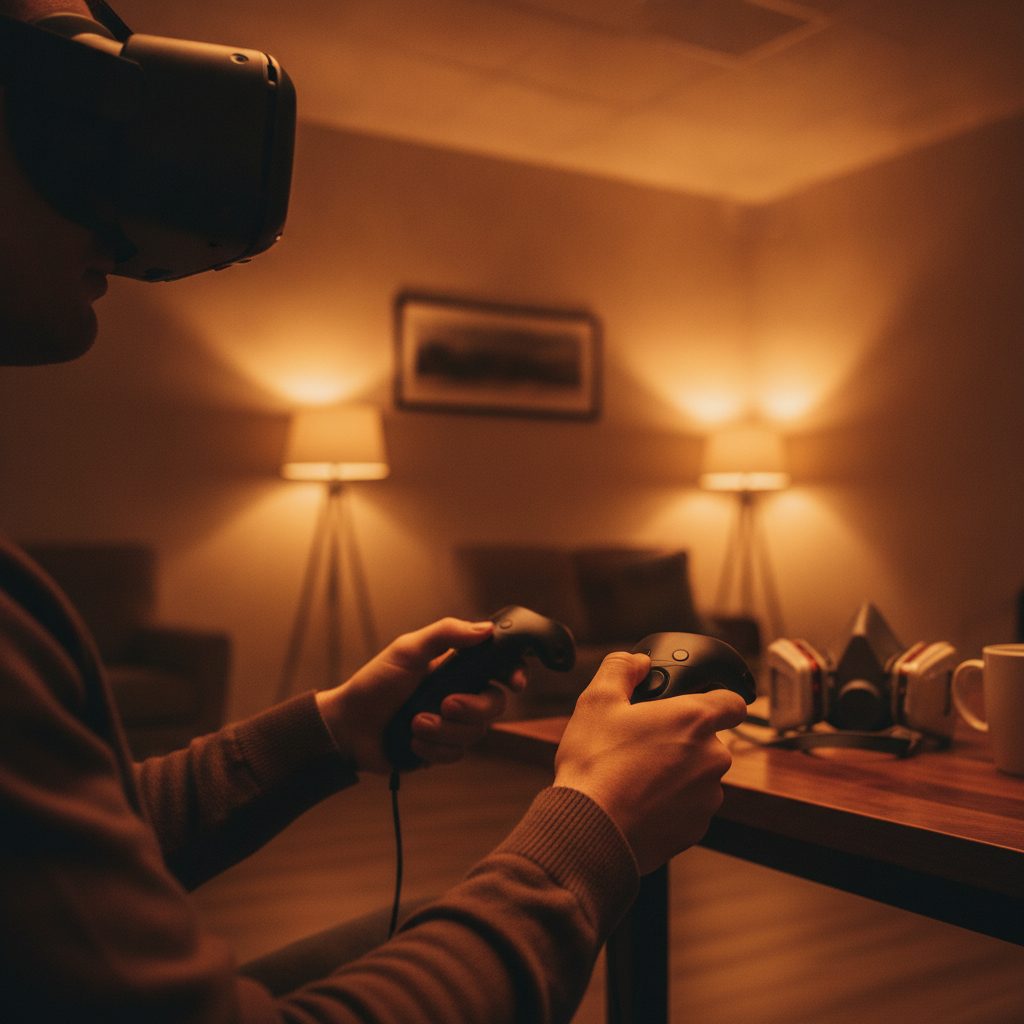
VR in Spray Foam
VR Safety Training for Spray Foam Installers
Why isocyanate exposure risk and respirator/PPE drilling make spray foam application a strong candidate for VR-based safety training — drawing on real precedent from adjacent trades.
Spray polyurethane foam application carries a specific, well-documented occupational hazard profile: airborne isocyanate exposure (almost always MDI), the need for correctly fitted supplied-air or powered air-purifying respirators, and strict re-entry timing for anyone near a fresh application. New installers currently learn this almost entirely through direct exposure — shadowing an experienced sprayer on a live job, wearing real PPE around real chemical hazard from day one.
That's exactly the kind of high-consequence, hard-to-practice-safely scenario that VR safety training exists to address in other trades. This page covers the honest case for it in spray foam specifically — grounded in what's actually been proven to work elsewhere, not a claim that anyone has built it yet.
The Real Precedent: Owens Corning and PIXO VR in Roofing
Owens Corning's roofing division has partnered with PIXO VR to deliver virtual reality training through Owens Corning University, using Pico 4 Ultra Enterprise headsets to simulate shingle installation, ridge venting, flashing details, and roof-deck inspection. This is a real, currently operating program in a licensed, documented partnership — not a concept demo — and it's the single closest and most relevant precedent for what VR safety training could look like in spray foam.
The roofing program targets exactly the kind of training that's expensive and risky to practice repeatedly on a real roof: correct sequencing, hazard recognition, and procedural judgment. Spray foam's hazard profile is different in kind — chemical exposure rather than fall risk — but the training problem it's solving is structurally the same: how do you give a new hire repeated, safe practice at a task that's dangerous to get wrong on a live job.
What Spray Foam's Specific Hazard Profile Would Ask VR to Do
A VR safety module for SPF installers would logically need to cover: correct respirator selection and fit-check procedure for the specific application (open cavity vs. confined space changes the required protection level), recognizing when ventilation is inadequate before spraying starts, understanding re-entry timing after a spray session, and reading warning signs of an off-ratio mix (which the Off-Ratio & Improper Cure Science content on our sister site covers in chemistry detail) that a trainee wouldn't yet recognize on their own.
None of that requires touching real isocyanate to practice — which is precisely the argument for simulation. A trainee can fail a virtual respirator fit-check, get virtual feedback on what went wrong, and retry immediately, at zero chemical exposure risk and zero material cost. That's a genuinely different training loop than 'stand next to someone experienced and watch.'
Why This Hasn't Been Built for Spray Foam Yet
Roofing has a larger addressable trainee population and higher-profile national brands (Owens Corning, GAF, CertainTeed) with training-and-brand budgets that can absorb a VR pilot program's cost. Spray foam's installer base is comparatively smaller and more fragmented across regional contractors and smaller manufacturers, which changes the economics of building a dedicated training product — someone has to be able to sell it to enough buyers to justify development.
That's a market-size and go-to-market problem, not a technology problem. The underlying VR training methodology PIXO VR and similar vendors have already proven in roofing, construction, and industrial safety training would transfer to spray foam's hazard profile without needing new core technology — it would need a spray-foam-specific content build, which nobody has funded yet.
What a Legitimate Program Would Need to Get Right
A real spray foam VR safety module would need direct input from OSHA-recognized SPF safety standards, isocyanate-specific respiratory protection guidance (from bodies like the Spray Polyurethane Foam Alliance, SPFA), and ideally validation from an actual training program rather than a generic VR studio guessing at the hazard profile. Safety training that gets the specifics wrong is worse than no VR training at all — it would need the same rigor as any OSHA-aligned safety curriculum, just delivered in a headset.
Key Takeaways
- New SPF installers currently learn isocyanate exposure safety almost entirely through direct, real-chemical exposure alongside an experienced sprayer.
- Owens Corning + PIXO VR's roofing training program is real, sourced, currently operating precedent for what this could look like — in an adjacent trade, not spray foam itself.
- No spray-foam-specific VR safety training product exists today — this is a market-size and funding gap, not a technology gap.
- A legitimate version would need direct alignment with OSHA and SPFA safety standards, not a generic VR studio's guess at the hazard profile.
Common Questions
VR Safety Training FAQs
Real questions people ask about VR's role in this trade.
Related Topics
VR Sales Visualization: 3D Cutaway Walls for Homeowners
How a 3D cutaway VR walkthrough of insulated vs. uninsulated walls could help homeowners understand what they're actually buying — before a single can of foam is sprayed.
Read moreWhy Spray Foam Application Is a Natural Fit for VR Training
The specific mechanics of SPF application — spray-gun distance, pass speed, overlap, ratio awareness — are motor-skill and judgment tasks VR simulation is built to drill without wasting material.
Read moreThe Technology Behind VR Jobsite Training
Headsets, haptic controllers, and photogrammetry-captured job sites — the actual hardware and software stack real VR trade-training programs are built on today.
Read more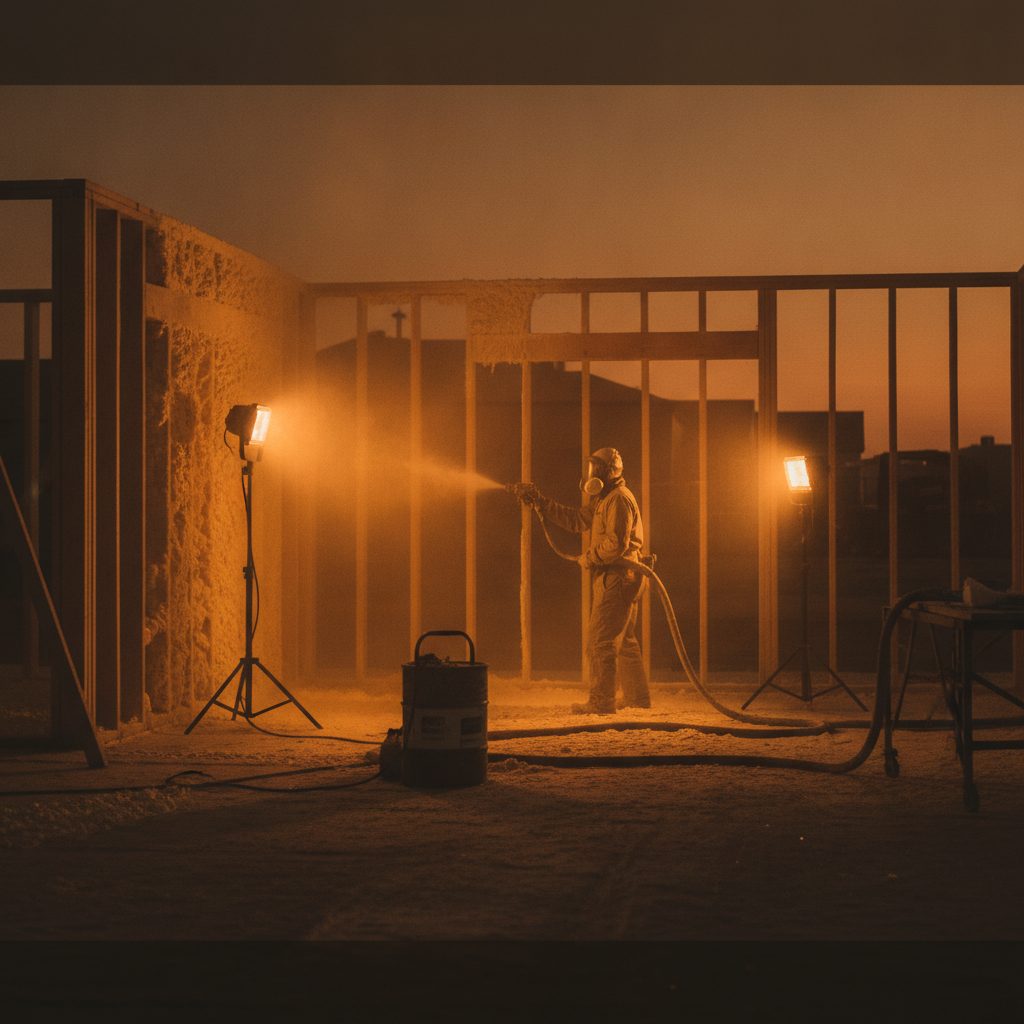
Curious Where This Goes Next?
Get on CCA's list for updates as VR training and sales-visualization tools develop for the spray foam industry — free, no obligation, no product to buy today.