VR in Spray Foam
The Technology Behind VR Jobsite Training
Headsets, haptic controllers, and photogrammetry-captured job sites — the actual hardware and software stack real VR trade-training programs are built on today.
The hardware and software stack behind real trade VR training programs today is more mature and more accessible than most people outside the industry assume. This page covers what's actually powering programs like Owens Corning's roofing training, since it's the same stack a spray foam program would realistically build on.
Headset Hardware: Standalone, Enterprise-Grade
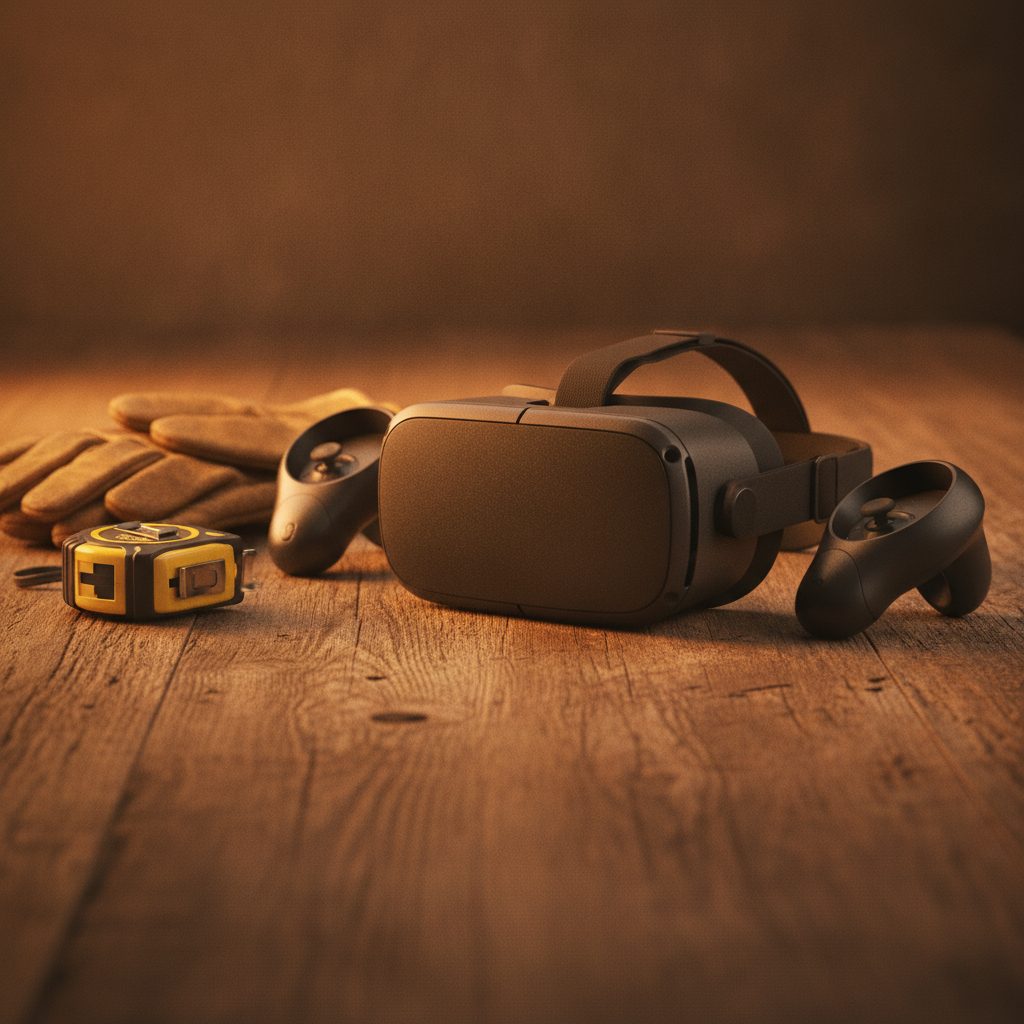
Owens Corning's PIXO VR program runs on Pico 4 Ultra Enterprise headsets — a standalone (no external PC or console required) headset with color passthrough and hand-tracking, built specifically for enterprise training deployments rather than consumer gaming. Standalone hardware matters for jobsite and training-center deployment specifically because it removes the need for a tethered PC setup, external tracking sensors, or a dedicated VR room — a headset can be handed to a new hire in a break room or training trailer with minimal setup.
Content Platform: Purpose-Built Training Software, Not Consumer Game Engines Alone
PIXO VR builds on top of standard game-engine technology (Unity and Unreal Engine are the dominant choices industry-wide) but wraps it in enterprise training-specific features: progress tracking, scoring, LMS (learning management system) integration so a company can track which employees completed which modules, and content update pipelines that don't require rebuilding the whole application for a curriculum change. That enterprise layer — not the underlying 3D engine — is usually the harder and more expensive part of building a real training product, which is part of why this space has professional vendors rather than every trade association building its own from scratch.
Photogrammetry and Job-Site Capture
Realistic training environments increasingly use photogrammetry — capturing real job sites or mockups with a camera rig or drone and reconstructing them as accurate 3D models — rather than hand-modeling every environment from scratch. For spray foam specifically, this would mean scanning real attic, wall-cavity, and crawlspace assemblies to build training environments that match what a new hire will actually encounter, rather than a generic simplified 3D room that doesn't reflect real job-site conditions like tight roof pitches or obstructed crawlspaces.
Haptics: The Current Limiting Factor
Haptic controllers (hand controllers that simulate resistance, vibration, or texture) have improved substantially but still fall short of replicating the specific physical feedback of operating a loaded spray gun and heated hose — weight, pressure, and thermal sensation together. This is the most likely reason full physical-technique training (as opposed to procedural and judgment training) remains harder to fully simulate for SPF than for a task like shingle placement, which involves lighter tools and less specialized physical feedback.
Key Takeaways
- Real programs run on standalone enterprise headsets (like the Pico 4 Ultra Enterprise) — no tethered PC or dedicated VR room required for jobsite deployment.
- The harder, more expensive part of a real training product is the enterprise layer — LMS integration, progress tracking, content pipelines — not the underlying game engine.
- Photogrammetry lets developers capture real job-site conditions (tight attics, obstructed crawlspaces) rather than building generic simplified environments.
- Haptic feedback is the current technical limiting factor for replicating the specific physical feel of spray-gun operation, more than any other part of the stack.
Common Questions
The Technology Stack FAQs
Real questions people ask about VR's role in this trade.
Related Topics
VR Safety Training for Spray Foam Installers
Why isocyanate exposure risk and respirator/PPE drilling make spray foam application a strong candidate for VR-based safety training — drawing on real precedent from adjacent trades.
Read moreVR Sales Visualization: 3D Cutaway Walls for Homeowners
How a 3D cutaway VR walkthrough of insulated vs. uninsulated walls could help homeowners understand what they're actually buying — before a single can of foam is sprayed.
Read moreWhy Spray Foam Application Is a Natural Fit for VR Training
The specific mechanics of SPF application — spray-gun distance, pass speed, overlap, ratio awareness — are motor-skill and judgment tasks VR simulation is built to drill without wasting material.
Read more
Curious Where This Goes Next?
Get on CCA's list for updates as VR training and sales-visualization tools develop for the spray foam industry — free, no obligation, no product to buy today.