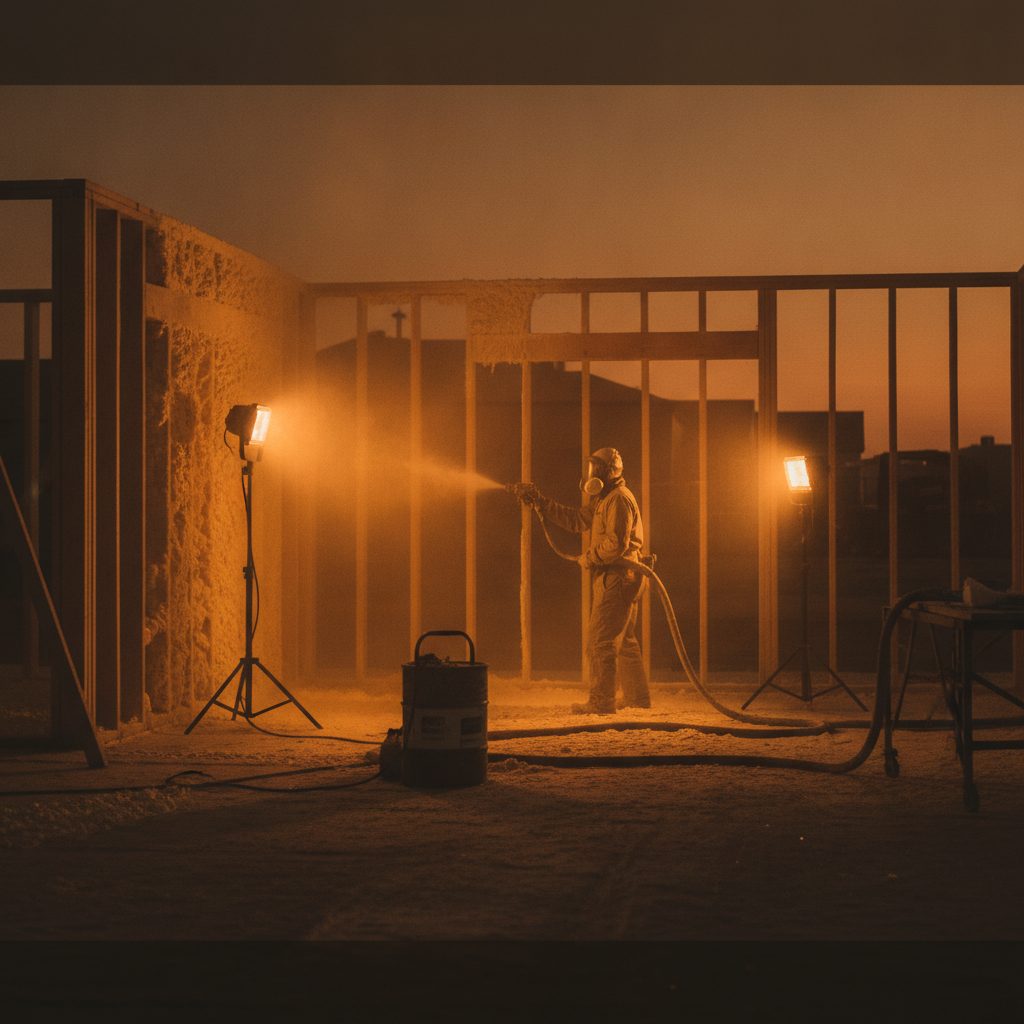
Why No One Has Built Spray Foam VR Training Yet — And What It Would Take
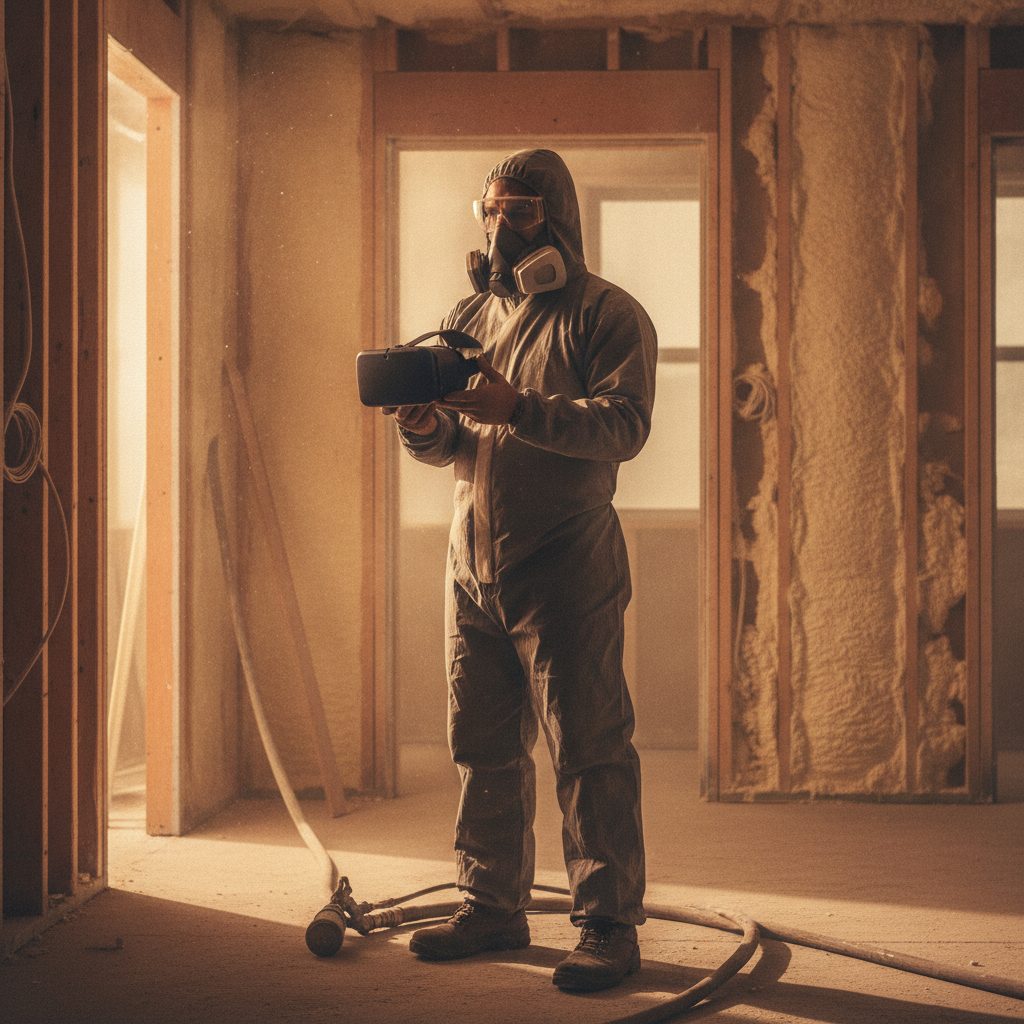
If Owens Corning and PIXO VR have already proven VR trade training works, and the underlying technology is mature enough to deploy on a standalone headset with no special setup — why hasn't anyone built the spray foam equivalent? The honest answer isn't "the technology isn't ready." It's a market and funding problem, and it's worth being specific about why.
Market Size and Fragmentation
Roofing has a small number of very large, brand-visible national manufacturers — Owens Corning, GAF, CertainTeed — each with a large installer network, a recognizable consumer brand, and a marketing budget that can absorb an enterprise VR pilot partly as a brand-differentiation investment, not purely a training cost. Spray foam's manufacturer landscape (BASF, Huntsman/Icynene-Lapolla, Carlisle, and others) is real but more fragmented at the installer level, spread across smaller regional contractors rather than concentrated under a few consumer-facing national brands. That changes the return-on-investment math for whoever would have to fund development.
No Funded First Mover Yet
VR training content, done properly, isn't cheap to build — the PIXO VR partnership represents real investment from Owens Corning specifically. Someone has to be willing to fund a spray-foam-specific build before it exists, and as of this writing, no manufacturer, contractor group, or VR training vendor has publicly done so. This is a chicken-and-egg problem common to a lot of emerging trade technology: the case for building it is genuinely strong, but someone still has to go first and absorb the upfront cost before the market proves itself.
A Harder Content Problem Than Roofing's
Roofing's core training content — sequencing, footing, hazard recognition on a virtual roof — maps fairly directly onto VR's existing strengths in spatial and procedural simulation. Spray foam's core hazard is chemical exposure, which requires the content to be built in close collaboration with occupational safety expertise (ideally aligned with OSHA guidance and the Spray Polyurethane Foam Alliance's own standards) to be genuinely useful rather than a generic "wear PPE" module that misses the specific ratio-recognition and respirator-fit nuance this trade actually needs. That's a real, non-trivial content development lift beyond what building the roofing program required.
What Would Realistically Change This
Three plausible triggers: a large SPF manufacturer deciding to fund a program the way Owens Corning did (the most direct parallel); an existing enterprise VR training vendor like PIXO VR proactively expanding their trade catalog into spray foam, the way a software company expands into an adjacent vertical; or an insurance, liability, or code-compliance driver making documented VR-based safety training valuable enough that underwriters or industry bodies start asking for it — a pattern that has pushed safety-training standardization in other high-hazard trades before.
The Honest Bottom Line
This is a real, well-precedented idea sitting in a genuine funding and content-development gap, not a technology gap and not vaporware. If you're in the industry and this is the first time you're seeing the case laid out this specifically, that's part of the point — nobody has made this case publicly and honestly before, which might itself be part of why it hasn't happened yet.
Read the full future-of-adoption analysis, or get updates if you want to be the first to know when something real launches.