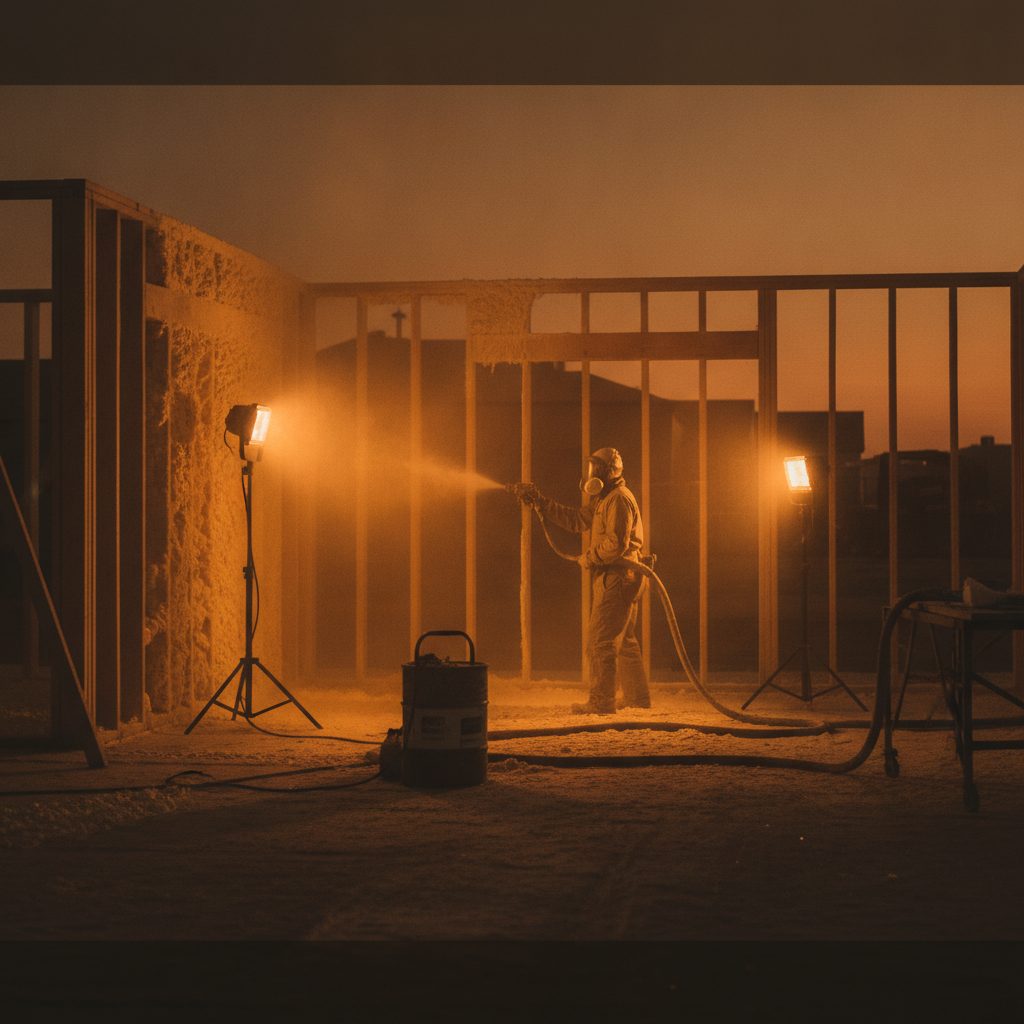
The VR Headset Hardware Landscape for Jobsite Training in 2026
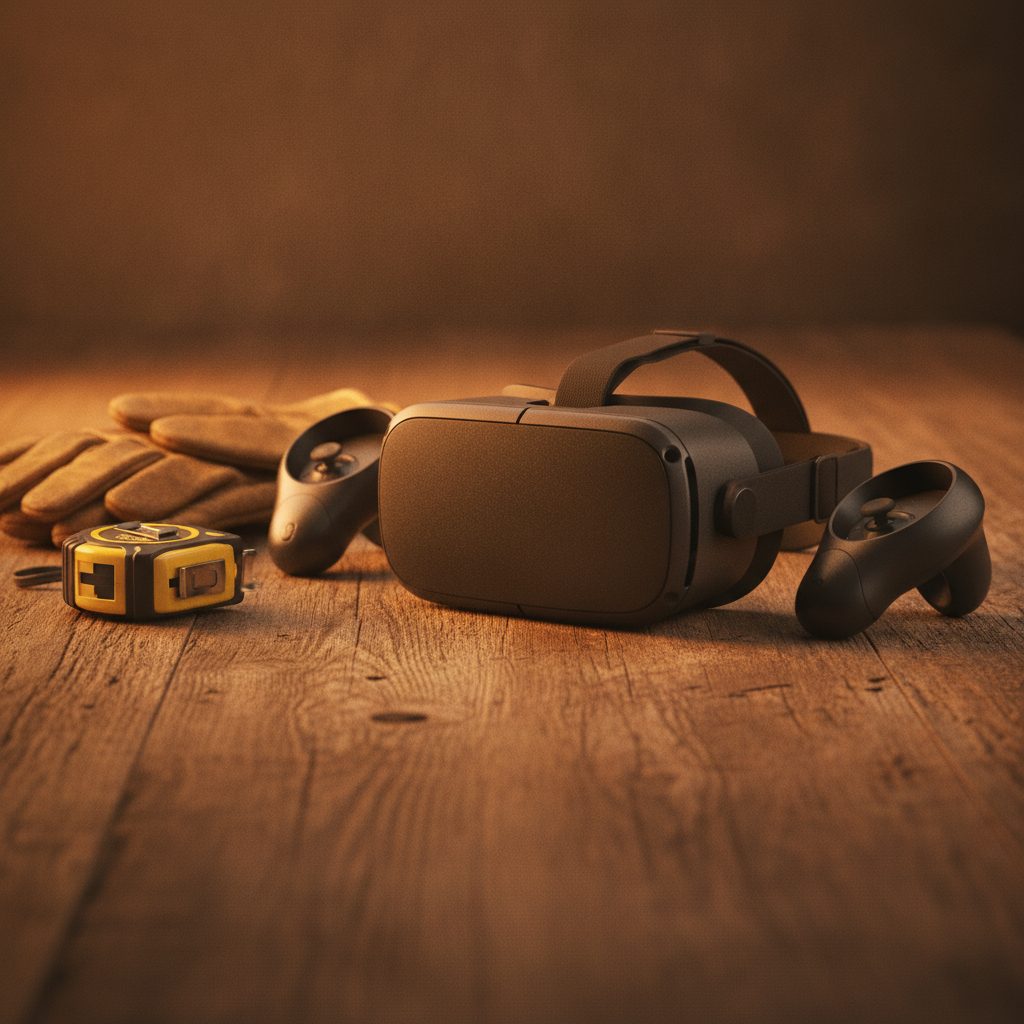
Anyone picturing "VR training" from a few years of consumer gaming coverage is probably imagining a tethered headset wired to a gaming PC, in a cleared-out room with external tracking sensors bolted to the walls. That's not what enterprise jobsite training hardware looks like in 2026, and the difference matters for whether something like spray foam VR training is actually practical to deploy.
Standalone Is the Default for Enterprise Training
Owens Corning's roofing training program, delivered through Owens Corning University with PIXO VR, runs on Pico 4 Ultra Enterprise headsets — standalone devices with onboard processing, color passthrough (so a wearer can still partially see their real surroundings), and hand-tracking, requiring no external PC, console, or tracking sensor setup. That matters enormously for jobsite and training-center deployment specifically: a standalone headset can be handed to a new hire in a break room, a training trailer, or a regional office with essentially no setup overhead, charged like a tablet, and updated over the air.
A tethered setup requiring a dedicated PC and a cleared physical space is a real barrier to adoption for a trade with dispersed regional contractors and training happening in ordinary job-site trailers, not a corporate campus with a dedicated VR lab. Standalone hardware removes that barrier almost entirely.
The Software Layer Nobody Sees
The headset itself is the visible part, but the harder engineering work in a real training product is the software layer wrapped around a game engine (Unity and Unreal Engine remain the dominant underlying engines industry-wide): progress tracking per trainee, scoring rubrics tied to specific procedural steps, LMS (learning management system) integration so a company's training records show who completed what, and content-update pipelines that let a vendor push a curriculum change without rebuilding the whole application. This enterprise layer is why trade-specific VR training tends to come from specialized vendors like PIXO VR rather than every trade association building a one-off app.
Photogrammetry: Real Environments, Not Generic Rooms
A growing share of realistic training content uses photogrammetry — scanning real physical spaces with a camera rig or drone and reconstructing them as accurate 3D models — instead of hand-modeling generic environments. For a trade like spray foam, this would mean scanning real attics, wall cavities, and crawlspaces with their actual obstructions, tight clearances, and irregular geometry, rather than training someone in an idealized, unrealistically spacious 3D room that doesn't reflect what they'll actually encounter on a job.
Where the Hardware Still Falls Short
Haptic controllers — the hand controllers meant to simulate resistance, texture, or force feedback — have improved but still can't fully reproduce the specific physical sensation of operating a loaded, pressurized spray gun connected to a heated hose. That's a real, current hardware limitation, not a solved problem being underused. It's the clearest reason full physical spray-technique certification still requires real equipment, even as procedural and safety training moves increasingly toward simulation.
See the technology page in full, or read about why spray foam application specifically fits VR's strengths.